

Last Updated: November 21, 2026
Quick Summary
Fun conversation starters for Christian families are simple, open-ended prompts that turn ordinary moments like dinner or car rides into real connection. Pick one question, let it breathe, and use playful prompts to warm up the table before sliding into deeper faith questions.
- Pick one question per sitting and let it breathe instead of asking too many.
- Funny icebreakers lower defenses, then slide into deeper questions while everyone is relaxed.
- For teens, offer the question in advance so they have time to think.
- Set ground rules before sensitive faith discussions: no correcting mid-thought, everyone gets a turn.
- A four-week plan moves from funny icebreakers to gratitude, Bible stories, and prayer.
Table of Contents
- Why Fun Conversation Starters Work for Christian Families
- Christian Family Dinner Questions That Get Everyone Talking
- Funny Christian Icebreaker Questions for Laughter and Connection
- Christian Conversation Starters for Teens
- Family Dinner Conversation Cards: A Ready-to-Use Plan
- Age-Specific Prompts for Toddlers, Kids, and Mixed-Age Groups
- Inclusive Prompts for Blended, Adoptive, and Interfaith Families
- Build Your Family Conversation Habit with Brandy Clark
- Frequently Asked Questions
Why Fun Conversation Starters Work for Christian Families
Fun conversation starters for Christian families are simple prompts that turn ordinary moments into real connection. They work because they give everyone a low-pressure way in.
Faith often grows in the small, everyday spaces: the dinner table, the car ride, the kitchen counter.
Below, we'll show you exactly how to use these prompts with kids, tweens, teens, and adults, plus a ready-to-run plan you can start tonight.
Christian Family Dinner Questions That Get Everyone Talking
Christian family dinner questions work when they're specific, open-ended, and a little surprising. A good question should be easy to answer but hard to answer in one word. That's the difference between a prompt that sparks a conversation and one that ends in silence.
Quick Dinner Prompts for Busy Weeknights
Some nights you have twenty minutes and a table full of tired people. These prompts fit that reality:
- What's one thing that made you smile today?
- If you could ask God one question right now, what would it be?
- What's your favorite Bible story, and why?
- Who did you help today, or who helped you?
- What's one thing you're grateful for that you've never said out loud?

A common mistake is asking too many questions in one sitting. Pick one. Let it breathe. The best family conversations meander, and that's the point.
Funny Christian Icebreaker Questions for Laughter and Connection
Funny Christian icebreaker questions break the ice faster than anything else. Laughter lowers defenses, and a relaxed family is a family willing to share what's actually on their minds.
Try these:
- Would you rather have Noah's ark-building skills or Jonah's ability to survive a whale?
- Which Bible character would be the worst road-trip companion?
- If David showed up to your family game night, who would he beat first?
For bigger groups, game nights, and family celebrations, a structured game keeps the laughter going. Our Christian party game is built for exactly this: a laugh-out-loud experience that still gets people talking about faith.

Watch out: don't let the funny questions become the only questions. Use them to warm up the room, then slide into something deeper while everyone is still relaxed.
Christian Conversation Starters for Teens
Christian conversation starters for teens have to clear a higher bar. Teens can spot a scripted question from across the room. They respond to prompts that are honest, a little vulnerable, and don't have an obvious "right" answer.
These tend to land well:
- When does faith feel most real to you, and when does it feel hardest?
- What's one thing about church you'd change if you could?
- Who's a person in your life who shows you what following Jesus looks like?
- What's a question about God you're afraid to ask out loud?
- What does it look like to be a Christian at school?
- If you could ask God one question and get a guaranteed answer, what would it be?
- What's a Bible story you wish you understood better?
- When have you felt closest to God, and what was happening?
Our resources for teens are built with this age group in mind, with prompts that respect where teens actually are instead of talking down to them.
Adapting Prompts for Neurodivergent Teens and Mixed-Age Groups
Not every teen processes a question the same way. For neurodivergent teens, or any teen who needs more time, offer the question in advance. Write it on a card, text it that morning, or put it on the fridge. If you are working with very young children, these devotional activity ideas for toddlers help keep little hands busy while the older kids talk.
Handling Tense or Sensitive Faith Discussions
Sensitive faith discussions go better when you set the ground rules before the question, not after. Say it plainly: no one has to agree, no one gets corrected mid-thought, and everyone gets a turn.
A few concrete moves help when the topic turns tense:
- Name the feeling first. "That sounds frustrating" or "That's a heavy question" lowers the temperature before you try to answer.
- Separate the question from the person. "That's a good question about the Bible" is different from "Why would you ask that?"
- Use a pause phrase. "Let me think about that and get back to you" is a real answer, and it models humility.
Watch out: don't turn every sensitive question into a teaching moment. Sometimes the most faithful response is to listen, say thank you, and let the question stay open.
Family Dinner Conversation Cards: A Ready-to-Use Plan
Family dinner conversation cards remove the hardest part of this: remembering to do it. Here's a simple four-week plan you can run with a deck of cards or a printed list.
| Week | Focus | How It Works | Time |
|---|---|---|---|
| Week 1 | Funny icebreakers | One silly question per dinner | 5 min |
| Week 2 | Gratitude | Each person names one good thing | 5 min |
| Week 3 | Bible stories | One story question, one favorite character | 10 min |
| Week 4 | Faith and prayer | One deeper question, one prayer request each | 10 min |
Time
If you'd rather skip the prep, our Would You Rather card game gives you a ready-made deck of 44 cards, each with a question on the front and a Scripture on the back.
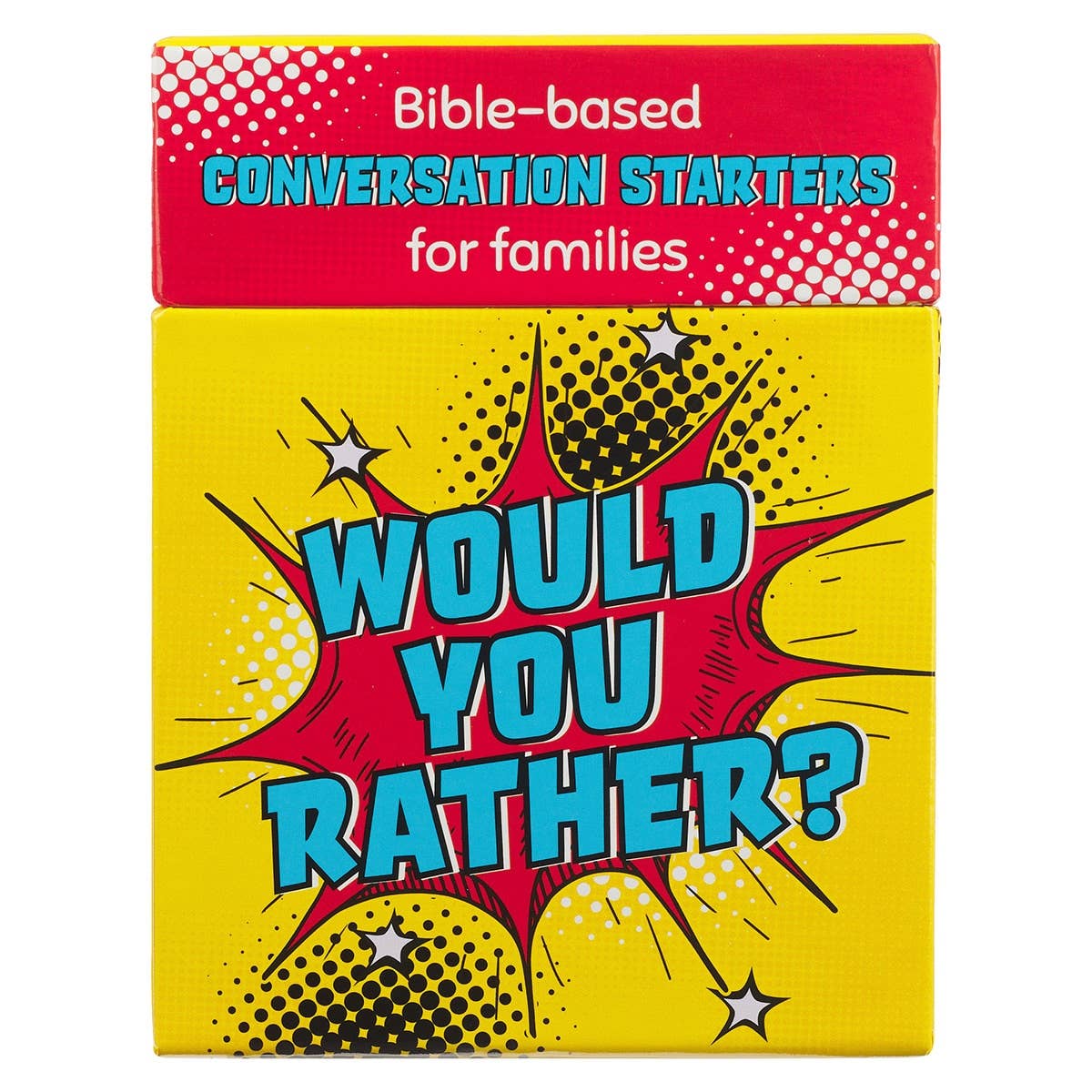
Best for: families with mixed ages who want zero prep. Skip if: your kids are all under five, where the questions will need simplifying.
Age-Specific Prompts for Toddlers, Kids, and Mixed-Age Groups
Age-specific prompts matter more than most parents expect. A question that sparks a ten-year-old will confuse a toddler and bore a teenager.
For toddlers and preschoolers, keep it concrete and visual: "What's your favorite animal on Noah's ark?" or "What color did God make your favorite flower?"
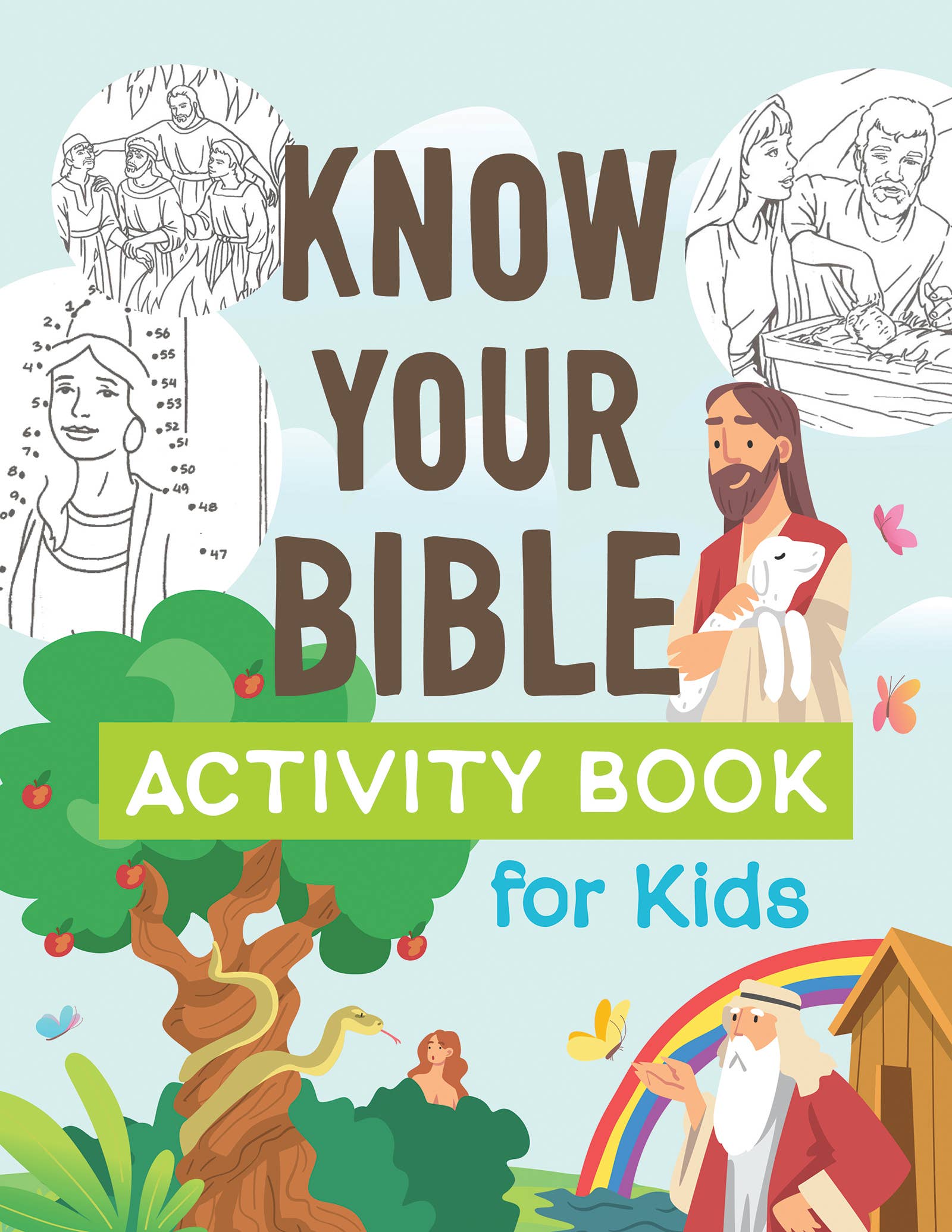
For kids ages 6 to 10, our Know Your Bible activity book is packed with crosswords, word searches, secret codes, and coloring pages covering all 66 books of the Bible, so a child can work on a page while you ask a related question.
For mixed-age groups, use a two-tier approach: ask the simple version first, then add a follow-up for older kids.
Inclusive Prompts for Blended, Adoptive, and Interfaith Families
Inclusive prompts need careful wording. Questions that assume a mom-and-dad household, a shared last name, or a shared faith background can quietly leave someone at the table feeling like an outsider. Most lists of family conversation starters are written for a two-parent, same-faith household. This section is for everyone else, and for families who want their table to be a place where every story fits.
Try these instead:
- Who in your family, chosen or given, has taught you the most about kindness?
- What's a tradition from your past that you'd like to bring into our family?
- What's one thing you believe that you'd like to understand better?
- How can we make our home feel like a place where everyone's questions are welcome?
Wording That Includes Blended and Adoptive Families
Small word choices make a big difference. "Parents" is safer than "mom and dad." "The adults who raise you" is safer than "your parents." "Family" can include chosen family, step-siblings, half-siblings, and relatives who live far away. Avoid questions that assume everyone has the same last name, the same memories, or the same baby pictures. If a child joined the family through adoption or foster care, let them decide how much of their story to share.
Wording That Includes Single-Parent Households
Single-parent families often carry a heavier load at the table. Keep prompts low-prep and low-pressure. "What's one thing that made you smile today?" works for every household structure. Avoid questions that assume two adults are present, such as "What's one thing you and your spouse are grateful for?" If you are a single parent, let your child see you answer the question too.
Wording That Includes Interfaith Households
For interfaith households, frame prompts around shared values like gratitude, forgiveness, and care for others. You are not asking anyone to resolve their beliefs at the dinner table. You are building the habit of talking honestly about faith, which is the foundation everything else rests on. A few guardrails help:
- Ask about values, not verdicts. "What's one way you saw forgiveness this week?" is safer than "What do you believe about forgiveness?"
- Let each person speak for themselves. "What's a prayer you'd like us to pray together this week?" invites without requiring.
- Name the shared ground. "We don't all believe the same things, and we still belong to each other" is a sentence worth saying out loud.
- Avoid quiz questions. Prompts that sound like a test of belief shut down conversation. Prompts that invite a story open it up.
Watch out: don't use inclusive prompts as a subtle way to correct someone's beliefs. If a question feels like a setup, teens and adults will both spot it, and the table will go quiet.
Build Your Family Conversation Habit with Brandy Clark
Building a family conversation habit comes down to frequency, not intensity. Ten minutes at the table, three nights a week, beats one long discussion once a month.
Start with the plan above. Keep a simple list on the fridge. Let the kids take turns drawing the question.
If you want to turn these conversations into a lasting routine, our guide on building a daily prayer habit walks through how to make it stick when life gets busy. And if you're looking for a resource that pairs conversation with Scripture memory, our verse cards for kids give you ten cards built around the fruit of the Spirit, starting with Galatians 5:22.
The hardest part of family faith conversations isn't finding the right words. It's starting.
Frequently Asked Questions
What are some fun conversation starters for Christian families?
Start with light, silly questions that make everyone laugh, then move into faith. A round of Would You Rather based on Bible characters works for all ages, and simple prompts like 'What is one thing you are thankful for today?' get kids talking without pressure. Rotate between funny, gratitude, and Scripture-based questions so no one feels quizzed. The goal is connection, not a test.
What questions can Christian families ask at dinner?
Good dinner questions blend everyday life with faith. Try 'What was the best part of your day?', 'Where did you see God at work today?', or 'What is one thing you want to pray about?' Keep it to two or three questions per meal and let everyone answer, including parents. This builds a habit of Christian family dinner questions that children come to expect and enjoy.
How can I get my kids talking about faith?
Use open-ended prompts instead of yes-or-no questions, and tie them to something concrete like a Bible story, a prayer, or a family memory. Ask 'What would you have done if you were Noah?' rather than 'Did you learn about Noah?' Let kids share without correcting every answer, and share your own thoughts too. Consistency matters more than perfect answers.
What are good Christian conversation starters for teens?
Teens respond to questions that respect their growing independence. Try 'What is a belief you hold that your friends do not share?' or 'How do you decide what is right when no one is watching?' Pair these with funny Christian icebreaker questions to lower the pressure. Listen more than you talk, and avoid turning the conversation into a lecture or a correction session.
How can families make Bible conversations fun?
Turn Bible talk into a game. Use Would You Rather cards built on Bible characters, play a meme game for ages 13 and up, or color a Bible story tablecloth while chatting. Laughter lowers defenses and opens the door to real faith sharing. A family dinner conversation card deck also keeps prompts handy so you are not scrambling for ideas at the table.

0 comments