

Table of Contents
- Why Family Devotional Activity Books Matter for Toddlers
- How to Teach Kids Bible Verses Through Interactive Play
- Short Bible Lessons for Toddlers: What Actually Works
- Interactive Bible Activities for Preschoolers: Building Faith Through Play
- Top Family Devotional Activity Books Compared
- Making Bible Learning Stick: Practical Routines That Work
- Choosing the Right Activity Book for Your Family
- Conclusion
- Frequently Asked Questions
Last Updated: October 7, 2026
Why Family Devotional Activity Books Matter for Toddlers
Teaching faith to young children takes patience and tools built for their stage. Family devotional activity books for toddlers bridge storytelling and hands-on learning, turning Bible lessons into moments of connection.
At Brandy Clark, we know toddlers learn best through play, repetition, and sensory engagement. A family devotional activity book isn't just a picture book, it's a gateway to spiritual formation. Combining Scripture with felt pages, stickers, or doodle spaces builds associations between faith and fun that stick for years.

The challenge isn't finding books, it's finding ones that hold a toddler's attention while delivering real spiritual content. Many resources either talk down to children or demand too much. The right family devotional activity book meets toddlers at their level while respecting their curiosity about God.
How to Teach Kids Bible Verses Through Interactive Play
Bible verses stick when paired with movement, repetition, and hands-on activity. Rather than asking a toddler to sit still and memorize, interactive play anchors verses in their bodies and memories.
Start with short passages, no more than 4-6 words for children under three. Pair each verse with a simple action or gesture. When you say "Jesus loves me," have your child clap, spin, or touch their heart. The physical movement creates a stronger neural pathway than words alone.
Activity books accelerate this by providing visual cues and tactile elements. When a child traces letters, touches textured pages, or places stickers on a verse illustration, they encode Scripture through multiple sensory channels, which is powerful for toddlers still developing memory skills.
Short Bible Lessons for Toddlers: What Actually Works
Toddler attention spans are real: a two-year-old focuses 5-10 minutes, a three-year-old 10-15. Lessons designed for this reality look nothing like traditional Sunday school.
Effective short Bible lessons for toddlers follow this structure: story (2-3 minutes), sensory element (2-3 minutes), and repetition or prayer (2-3 minutes). The story should use simple language, repeat key words, and include sound effects or actions.
The sensory element matters as much as the story. After hearing about Noah's ark, a child might place animal stickers on a boat illustration, trace water waves, or match felt animals to their homes, bridging the gap between hearing and internalizing.
What doesn't work: lectures, worksheets for older children, or adult-style Bible study. Toddlers learn through play, and lessons that feel like play get requested again and again.
Interactive Bible Activities for Preschoolers: Building Faith Through Play
Preschoolers (ages 3-4) have longer attention spans and better motor skills, opening richer possibilities for interactive Bible activities. They can follow simple instructions, engage in pretend play, and grasp basic cause and effect in Bible stories.

The most effective interactive Bible activities for preschoolers combine storytelling with hands-on creation. Instead of just reading about the loaves and fishes, children can use playdough to shape bread, count out crackers, or create a paper boat. These activities anchor abstract spiritual concepts in concrete, sensory experience.
Preschoolers also benefit from activities that build connection: singing Bible songs, acting out stories as a family, or creating a shared prayer wall.
Top Family Devotional Activity Books Compared
When choosing a family devotional activity book, consider your child's age, learning style, and your routine. The right choice depends on what will actually get used in your home.
| Book | Age Range | Key Features | Best For | Price |
|---|---|---|---|---|
| Busy Windows Bible Stories | 0+ | Felt pages, peek-through windows, carry handle | Sensory learners, on-the-go families | $7.99 |
| My First Bible Stories | 0+ | Padded hardcover, embroidered felt patches, rhyming text | Tactile learners, gift-giving | $9.99 |
| Prayer Bear | 3+ | Soft furry cover, pocket for prayers, rhyming text | Children building prayer habits | $14.99 |
| My Pretty Pink Bible Activity Book | 3+ | Stickers, card press-outs, 54 pages of activities | Creative kids who love crafts | $9.99 |
| My Bible Backpack Activity Book | 3+ | Stickers, card press-outs, portable design | Active learners, travel | $9.99 |
| My Bible Stories Activity Book | 3+ | Stickers, card press-outs, colorful illustrations | Hands-on learners | $9.99 |
| Doodle Delete Repeat: My First Bible Stories | 3+ | LCD screen, stylus, mess-free doodling | Tech-curious kids, fine motor development | $12.99 |
| God's Farmyard Animals | 3+ | Built-in abacus, counting activities, rhyming text | Math-minded learners, sensory play | $12.99 |
| God's Underwater World Activity Book | 3+ | Stickers, card press-outs, search-and-find mazes | Exploratory learners | $9.99 |
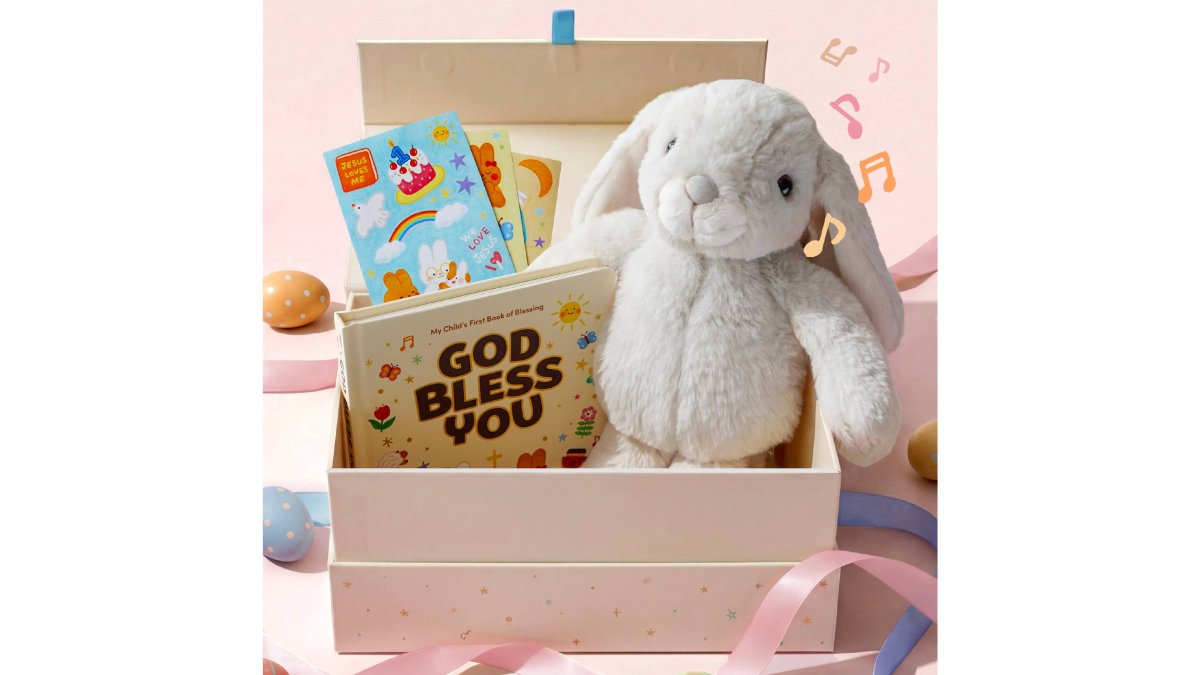
| Praise Bunny Gift Set | 0+ | Musical plush toy, Bible songs, hardcover book, stickers | Multi-sensory learners, gift bundles | $39.98 |
For the Youngest Learners (Ages 0-2)
Babies and young toddlers need sensory-rich experiences with minimal complexity. The goal isn't understanding Bible stories, it's creating positive associations with Scripture through touch, sound, and sight.

Busy Windows Bible Stories ($7.99) leads here because it combines multiple sensory inputs in one compact package. The felt-lined peek-through pages invite tactile exploration, and the carry handle means you can bring Bible learning anywhere.
My First Bible Stories ($9.99) works for children who love texture. The embroidered felt patches and padded hardcover make it feel special to hold, and the rhyming text aids language development while introducing familiar Bible narratives.
For families who want music and movement in devotional time, Praise Bunny Gift Set ($39.98) offers a premium option.
For Active Toddlers (Ages 2-4)
Toddlers in this range are developing fine motor skills and beginning to understand simple narratives. They need books that let them participate actively rather than passively receive stories.
My Pretty Pink Bible Activity Book ($9.99) gives toddlers multiple ways to engage: stickers appeal to their desire for autonomy, card press-outs develop fine motor control, and 54 pages hold attention for weeks.
My Bible Backpack Activity Book ($9.99) serves the same purpose with a design that travels well.
God's Farmyard Animals ($12.99) adds a learning dimension beyond Bible stories. The built-in abacus teaches counting while the rhyming text tells stories. This book works especially well for toddlers who respond to rhythm and number concepts.
For children who love drawing, Doodle Delete Repeat: My First Bible Stories ($12.99) turns devotional time into art time.
Busy Windows Bible Stories (Felt Board Book) →
For Hands-On Learners and Creative Kids
Some children are natural makers who want to build, create, and transform materials. For them, activity books with extensive craft components become the centerpiece of devotional time.
My Bible Stories Activity Book ($9.99) offers hours of engagement with 54 pages of activities, two pages of stickers, and 20 card press-outs.
God's Underwater World Activity Book ($9.99) combines search-and-find activities with mazes and crafts. The underwater theme appeals to children fascinated by nature and animals. Balloon stickers and card press-outs give hands-on learners multiple ways to interact with the content.
Prayer Bear ($14.99) serves a different purpose for this age group. The soft furry cover and pocket for written prayers invite children to express their faith creatively. Kids can write or draw prayers, decorate the pocket, and develop a tangible relationship with prayer.
Making Bible Learning Stick: Practical Routines That Work
Consistency matters more than perfection. A five-minute daily routine with a family devotional activity book builds stronger spiritual foundations than occasional hour-long sessions.
The most sustainable routines anchor Bible learning to existing family rhythms. Many families pair devotional time with meals, when everyone is already gathered, or with bedtime.
Start small. A realistic routine for families with toddlers looks like this: read a short Bible story (2-3 minutes), do one activity together (3-5 minutes), and say a simple prayer (1-2 minute).
Expect resistance and adapt. Some days your toddler won't sit still. Rather than abandoning the routine, keep stickers and a small basket of activity books within reach.
Rotate books to prevent boredom while building deeper engagement. Rather than introducing a new book every week, cycle through three favorites.
Choosing the Right Activity Book for Your Family
The best family devotional activity book is the one your family will actually use, matched to your child's developmental stage, learning style, and your realistic capacity.
Consider age first. Books for ages 0-2 emphasize sensory experience and simple text; books for ages 3+ include more complex activities and creativity.
Think about learning style. Does your child learn best through movement and touch? Sensory-rich books like Busy Windows Bible Stories or My First Bible Stories will engage them.
Assess your routine. If you travel frequently, portable books with carry handles serve you better. If you have dedicated home time, table-based activity books are fine.
Start with one book. Rather than buying an entire library, choose one book that matches your child's age and your family's style.
Many families find Brandy Clark's activity books work because they're designed with real family routines in mind.
Conclusion
Building faith foundations with toddlers doesn't require elaborate planning or expensive resources, just consistency, age-appropriate tools, and genuine connection. Family devotional activity books for toddlers bridge storytelling and spiritual formation, making Bible learning accessible and joyful.
The right activity book becomes part of your family's rhythm, something children ask for and remember. Whether you choose a sensory-rich board book for your infant or a craft-filled activity book for your preschooler, Brandy Clark offers family devotional activity books designed for real families navigating real routines. Start with one book that matches your child's age and learning style, commit to a simple daily routine, and watch Bible stories become woven into your family's spiritual life. Shop now →
Frequently Asked Questions
How do you do a devotional with a toddler?
Keep it short and sensory. Choose a family devotional activity book with bright illustrations, simple text, and interactive elements like felt flaps or stickers. Sit together for 5-10 minutes, read the story aloud using expressive voices, and let your toddler touch and explore the pages. Pair it with a simple prayer or song. Consistency matters more than length; a daily two-minute routine builds stronger habits than occasional longer sessions.
What are the best Bible story books for 2-year-olds?
Look for board books with padded covers, simple rhyming text, and sturdy pages that withstand grabbing and turning. Books featuring familiar Bible characters like Noah, David, and Jesus work well because toddlers connect with repeated, recognizable stories. Hand-stitched illustrations and tactile elements like felt patches help hold attention. Avoid books with complex theology; focus on stories with clear, joyful messages about God's love.
How do you teach a toddler about God?
Use everyday moments and simple, concrete language. Point out God's creation during walks, sing Bible songs during meals, and read short Bible lessons for toddlers during calm times. Interactive Bible activities for preschoolers, like matching games, sticker activities, and hands-on crafts, make faith tangible. Toddlers learn through repetition and sensory experience, so the same stories, songs, and routines create comfort and familiarity with faith.
How long should a toddler devotional last?
Aim for 5-15 minutes depending on your child's age and attention span. Two-year-olds typically focus for 5-8 minutes, while three- and four-year-olds can manage 10-15 minutes. Watch your child's cues; if they're restless, wrap up. It's better to end on a positive note and leave them wanting more than to force a longer session. Consistency and joy matter far more than duration.
Are there interactive Bible study books for toddlers?
Yes. Many family devotional activity books include interactive elements designed for toddlers: peek-through pages with felt linings, sticker activities, card press-outs, and built-in sensory features like abacus sliders or LCD doodle screens. These hands-on components help toddlers stay engaged while learning Bible stories. They also encourage fine motor skill development and problem-solving alongside spiritual learning.
0 comments